The Ultimate Beginner’s Guide to Forex Trading in 2024
Forex: The Global Marketplace
What is Forex (Foreign Exchange)?
The Foreign Exchange market, also known as Forex or FX for short, is the global decentralized marketplace where national currencies are traded against one another. The foreign exchange market is the largest and most liquid market in the world, with a daily trading volume of $7.5 trillion +. That is more than all the world’s stock markets combined.
Forex Meaning and Definition in Simple Terms
Put very simply, Forex is the practice of exchanging one currency for another. If you’ve ever travelled abroad and exchanged your home currency for local currency at the bank, you have participated in the Forex market. The principle is exactly the same for traders: you buy one currency and sell another with the hope that the currency you bought will rise in value relative to the one you sold.
Forex is all about currency pairs. All Forex prices are quoted in pairs.
Example: EUR/USD = 1.0850
EUR is the base currency (first currency)
USD is the quote currency (second currency)
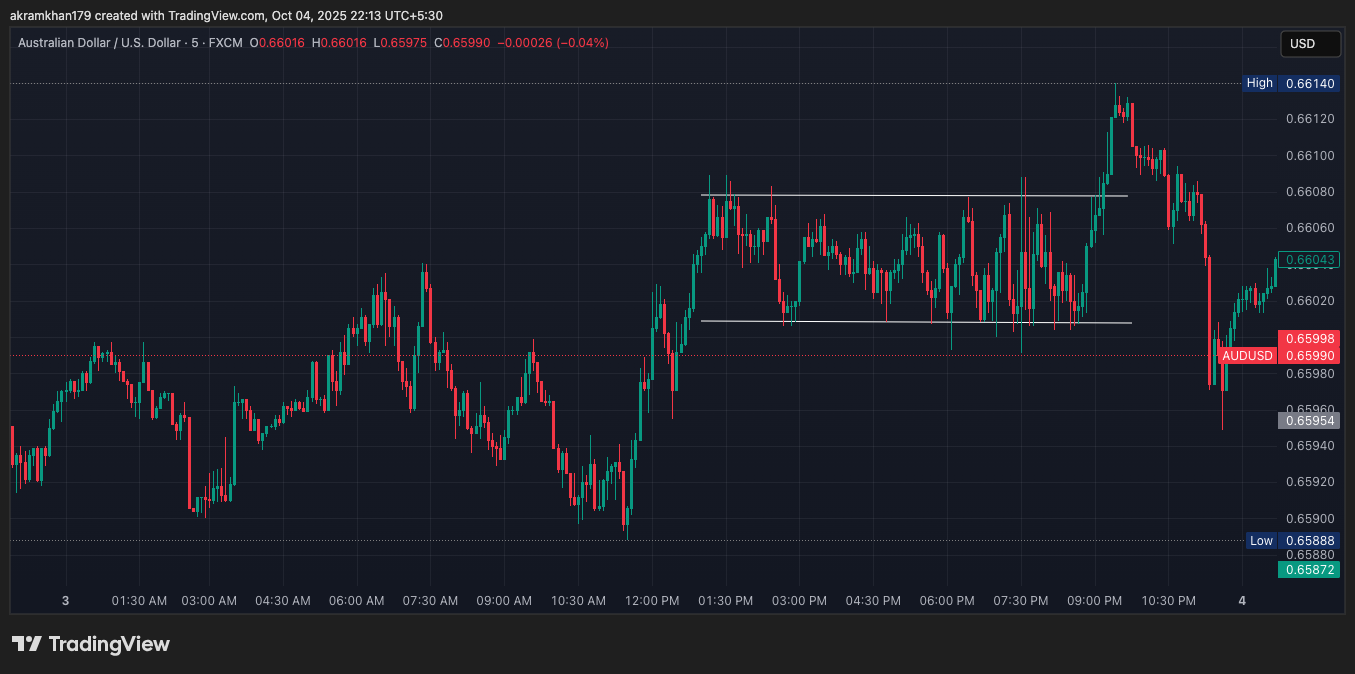
What is Forex Trading?
Explanation of Trading Currencies
Forex trading refers to the speculation on the ever-changing exchange rates between different global currencies. The goal is to profit from fluctuations in the price of currency pairs. If you think the value of a currency pair will rise, you buy it or “go long”. If you think the price will fall, you sell it or “go short”.
- A trader believes the Euro will rise against the US Dollar
- They BUY EUR/USD at 1.0850
- A week later, EUR/USD has moved up to 1.0950
- They SELL to close their position, making a profit from the 100 pip rise
Forex Trading vs. Stock Trading: A Key Comparison
| Factor | Forex Trading | Stock Trading |
|---|---|---|
| Market Hours | 24 hours a day, 5 days a week | Limited to exchange hours |
| Market Focus | Global macroeconomics and interest rates | Company and industry news, earnings reports |
| Liquidity | Extremely high | Varies by stock |
| Leverage | High (e.g. 1:30, 1:100, even 1:500) | Low (generally 1:2 or 1:5) |
| Profit Potential | Profit in both rising AND falling markets | Primarily profit from rising markets |
| Number of Instruments | ~100 major & minor pairs to focus on | Thousands of individual stocks to analyze |
How Does Forex Trading Work?
The Mechanics of Currency Pairs
The most important point to remember about Forex trading is that you never trade a currency in isolation. The FOREX market is a highly liquid, global network of banks, financial institutions, corporations, governments, and individual traders who electronically trade national currencies directly with one another.
How Profit and Loss is Calculated
The price of a currency pair is always expressed in pips (Percentage in Point). One pip is a price move of 0.0001 for most currency pairs. A pip is essentially the standard smallest price move the market can make.
- Standard Lot (100,000 units): 1 pip = ~$10
- Mini Lot (10,000 units): 1 pip = ~$1
- Micro Lot (1,000 units): 1 pip = ~$0.10
Let’s say you bought 1 mini lot of EUR/USD at 1.0850. The pair then rises to 1.0900. That is a 50 pip gain. Your profit is therefore 50 pips x $1/pip = $50.
Forex Market Basics
Forex Market Trading Sessions
The Forex market is open 24/5 (it closes on weekends). However, it’s not equally active across the day. Activity comes in waves across the globe:
Opens ~10 PM GMT. Kicks off the day’s trading.
Opens ~12 AM GMT. The Asian market center.
Opens ~8 AM GMT. Largest and most volatile session.
Opens ~1 PM GMT. Overlaps with London for peak activity.
Why Trade Forex? The Advantages
Easily enter and exit trades, even with large positions, and enjoy tight spreads.
Open 24 hours a day, 5 days a week, allowing you to trade around your schedule.
Amplify your trading capital to control larger positions with less initial capital.
Ability to go long (buy) or short (sell) allows opportunities in rising or falling markets.
Leverage Warning
Leverage is a double-edged sword that can magnify both profits AND losses just as easily.
Common Forex Terminology: A Beginner’s Dictionary
The smallest standard price move. For most currency pairs this is 0.0001.
Standardized unit size of a trade. Standard = 100,000 units, Mini = 10,000 units, Micro = 1,000 units.
Using borrowed capital to increase potential returns. Expressed as a ratio (e.g. 1:100).
The amount of your own capital required to open and maintain a leveraged position.
The difference between the Bid (sell) price and the Ask (buy) price. Your primary cost per trade.
Your gateway to the market providing access, trading platforms, and leverage.
How to Start Trading Forex: A Step-by-Step Plan
Learn the basics. Education never ends. This guide is your starting point.
Research fees, spreads, platform availability. Regulation is non-negotiable for safety. We highly recommend XM
Practice with virtual money. Use it as your risk-free training ground for 1-3 months.
Your rule book including risk tolerance, trading strategy, currency pairs, and schedule.
Start small. Only use capital that you can afford to lose.
Keep a trading journal. Analyze your successes and failures to constantly improve.
Among verified global brokers, XM consistently ranks as a premier choice for traders of all experience levels.