What is a Moving Average? The Core Concept
A moving average (MA) is a technical indicator that shows the average value of a security’s price over a specified number of past periods. The “moving” aspect refers to how the average changes over time as new price data is added and old data is discarded, creating a smoothed line that reveals underlying trends.
Practical Example (5-day SMA):
Closing prices: [100, 102, 104, 106, 108] → SMA = (100+102+104+106+108)/5 = 104
Next day price 110 → New SMA = (102+104+106+108+110)/5 = 106
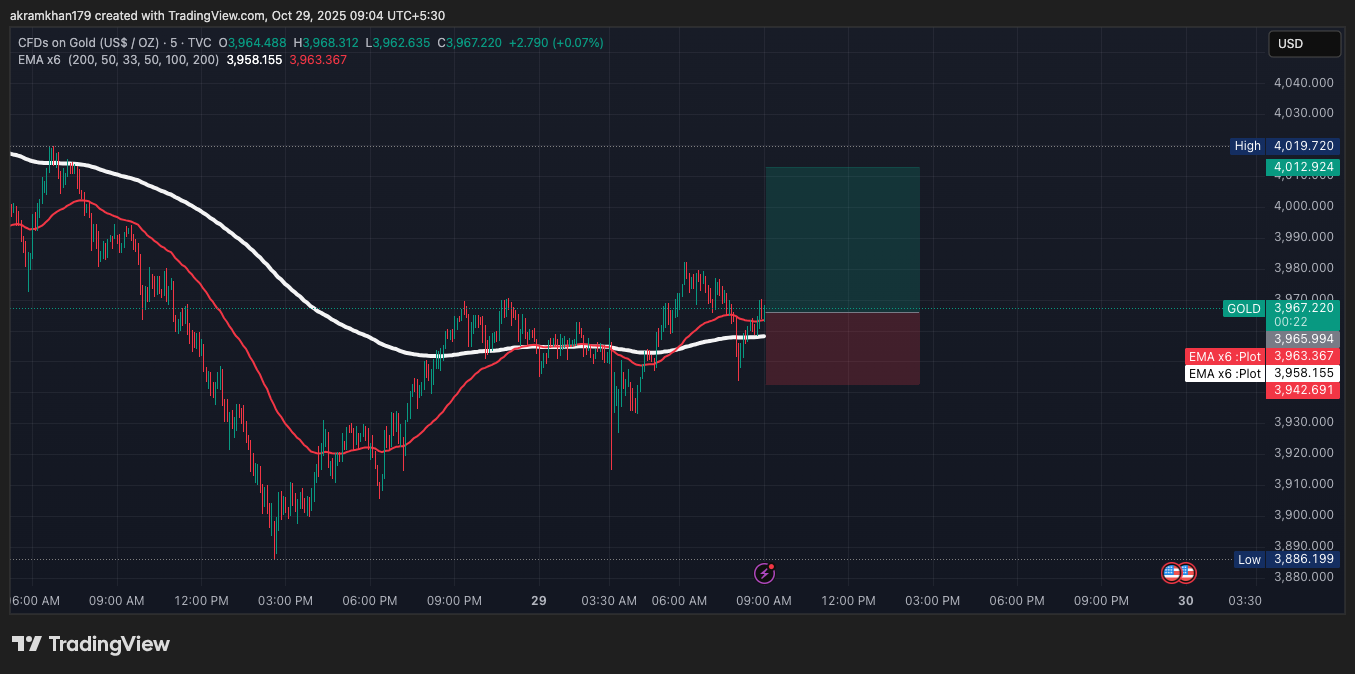
Moving Average Formulas and Calculations
Formula: SMA = (P₁ + P₂ + P₃ + … + Pₙ) / n
Where P = Price (usually closing price), n = Number of periods. Gives equal weight to all prices in the period.
Formula: EMA = (Price today × K) + (EMA yesterday × (1 – K))
Where K = 2 ÷ (n + 1) [Smoothing constant]. Assigns greater weight to recent prices, making it more responsive.
Comprehensive Guide to Moving Average Types
Equal weight to all prices. Excellent for highlighting long-term trends and significant support/resistance levels. Slower to react to recent price changes.
More weight to recent prices. More sensitive to new market information. Reacts more quickly but more susceptible to market noise. Ideal for fast-moving markets.
Linear weighting scheme with higher weights for recent prices. Less lag than SMA but more smoothing than EMA. Smooth line with balanced responsiveness.
Developed by Alan Hull. Significantly reduces lag while maintaining smoothness. Complex calculation based on multiple weighted moving averages. Excellent for early trend change identification.
Incorporates trading volume in calculation. More weight to periods with higher trading activity. Identifies high-volume support/resistance zones and confirms breakout significance.
Moving Averages in Market Analysis
- Price above MA = Uptrend
- Price below MA = Downtrend
- MA sloping upward = Bullish trend
- MA sloping downward = Bearish trend
MAs act as dynamic support in uptrends and resistance in downtrends. The 50-day and 200-day SMAs are particularly significant psychological levels respected by market participants.
Timeframe Applications: Short-term (9-20 period) for active trading, Medium-term (50 period) for swing trading, Long-term (100-200 period) for investment positioning.
Professional Moving Average Trading Strategies
Golden Cross: 50-period SMA crosses above 200-period SMA (bullish)
Death Cross: 50-period SMA crosses below 200-period SMA (bearish)
Most reliable on daily or weekly timeframes. Multiple MA systems use 3+ MAs for nuanced signals.
In uptrends: Buy when price approaches and bounces off rising MAs. In downtrends: Sell when price rallies to declining MAs. Use longer-term MAs (50, 200) for significant reversals.
Higher timeframe (daily/weekly) for overall trend direction. Lower timeframe (hourly/4-hour) for entry timing. Only take signals in direction of higher timeframe trend.
Create envelopes around MAs (typically ±2-3%). Identify overbought/oversold conditions relative to trend. Price near upper envelope = overextended, near lower envelope = oversold.
Integration with Other Indicators
Use MAs for trend direction. Use RSI for overbought/oversold conditions within trend. Look for divergences at key MA support/resistance.
Longer-term MAs for overall trend filter. MACD crossovers for entry timing. MACD histogram strength confirms MA breakouts.
Price reversion to MA centerline offers mean-reversion trades. MA slope determines trend direction for breakouts. Band width guides position sizing.
Advanced Moving Average Concepts
Automatically adjust sensitivity to market volatility. More responsive during high-volatility trends, more smoothed during low-volatility consolidation. Examples: Kaufman’s Adaptive MA (KAMA), Variable Index Dynamic Average (VIDYA).
Multiple MAs of different periods create a visual “ribbon.” Expanding ribbon = strengthening trend. Contracting ribbon = weakening momentum. Price position indicates trend strength.
Market-Specific Applications
Focus on stocks above key MAs (50/200-day). Avoid stocks with declining MA slopes. Use MA convergence to identify strength. Use volume-weighted MAs for earnings gap analysis.
Daily/weekly MAs for trend direction. Hourly/4-hour MAs for entry timing. MA confluence across currency pairs. Use MA-based stops for carry trade risk management.
Use longer periods (55, 89, 144). Implement wider stops due to volatility. Focus on EMAs for faster response. MA breaks often signify regime changes. Combine with on-chain metrics.
Risk Management with Moving Averages
Long positions: Stops below relevant MAs. Short positions: Stops above relevant MAs. Adjust stop distance based on MA volatility.
Combine MAs with Average True Range (ATR) to measure volatility. Larger positions in high-probability MA confluence. Smaller positions near MAs in choppy markets.